
Why FRVCD Does Not Fog Entire Neighborhoods on a Schedule
May 27, 2026
One of the most common questions we receive is:
“Why doesn’t the District just fog whole neighborhoods every week?”
The short answer is because broad, scheduled fogging is often ineffective, environmentally irresponsible, expensive, and in many cases not scientifically justified. Mosquito control today is based on surveillance, data, and targeted responses — not simply spraying entire areas on a routine schedule.
At FRVCD, we focus on science-based mosquito control. That means fogging only when mosquito activity is verified and justified through surveillance and field investigation.

Mosquito Control Must Be Justified
Mosquito fogging is one tool in mosquito control, but it is not a cure-all. Fogging is most effective when it is:
- Targeted to the correct area
- Conducted at the proper time
- Focused on biting mosquito activity
- Supported by surveillance data and field observations
Fogging entire neighborhoods “just in case” can waste taxpayer money, impact non-target insects, and often does little to solve the underlying mosquito source problem.
Our goal is not to eliminate every flying insect. We live in a beautiful wooded environment, and insects are naturally part of that ecosystem. FRVCD works to reduce biting mosquito populations that affect public health and quality of life while remaining as environmentally responsible as possible.
Resident Reports Are Extremely Important
District staff cannot be everywhere all the time. That is why resident reports are such an important part of our surveillance system.
When you report mosquitoes through our website, our technicians investigate the complaint and look for evidence of mosquito activity and possible breeding sources nearby.
If mosquitoes are especially bad in an area, it may indicate:
- An unmaintained ornamental pond
- A hidden ditch or standing water source
- Clogged drainage
- Tall grass or dense vegetation providing mosquito harborages
Sometimes the source is obvious. Sometimes it takes investigation to locate.
Please Be Honest About Mosquito Activity
When submitting a service request, accurate information helps us respond more effectively.
If a report states mosquito activity is “10 out of 10,” but our technician cannot find mosquitoes or evidence justifying treatment, we cannot fog the area simply based on the report alone.
A “10 out of 10” report does not automatically receive higher priority than a “3 out of 10” report. In fact:
- A severe report without verified mosquito activity may receive lower priority
- A mild report where technicians do confirm mosquitoes may receive faster treatment
Honest and accurate reporting helps us help you.
Helpful Information to Include in Your Report
The more details you provide, the faster we can identify and address the problem.
Helpful information includes:
- Are mosquitoes actively biting or just swarming?
- What time of day or night is the activity worst?
- Are mosquitoes concentrated in one area?
- Is there standing water nearby?
This information helps technicians determine:
- What species may be involved
- Where mosquitoes may be breeding
- Whether fogging or larval control is appropriate
Midges Are Also Active Right Now
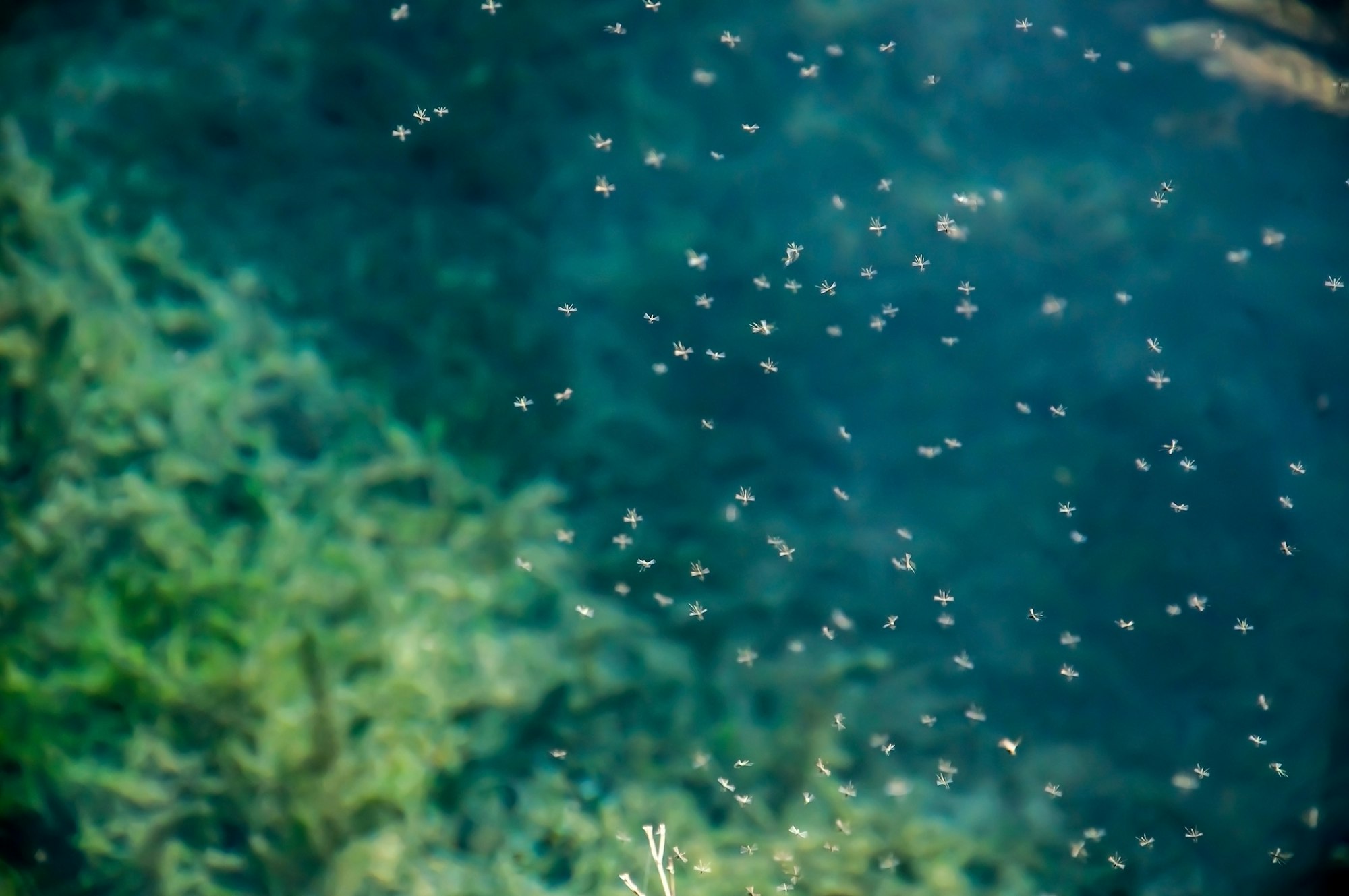
We are currently seeing high numbers of non-biting midges in some areas. Midges are often mistaken for mosquitoes because they swarm in large numbers, especially around lights and water.
Unlike mosquitoes, midges do not bite and generally do not require control measures.
Property Maintenance Helps Too
Keeping grass and vegetation trimmed helps reduce mosquito resting areas and makes it easier for our technicians to locate breeding sources.
Simple property maintenance can make a significant difference in reducing mosquito habitat around homes and neighborhoods.
Mosquitoes Are Temperature Dependent
Mosquitoes are generally active when temperatures are above approximately 50°F. Weather conditions, irrigation, standing water, and vegetation all influence mosquito activity levels throughout the season.
Help Us Help You
If mosquitoes are biting, please let us know through our website and provide as much accurate information as possible. Your reports help us locate breeding sources, respond efficiently, and apply mosquito control measures where they are truly needed.
Together, we can reduce mosquito problems while protecting our environment and using taxpayer resources responsibly.