Update of the Four Rivers Vector Control District
May 17, 2026
FRVCD Update: New Year, New Team, New Direction
The Four Rivers Vector Control District (FRVCD) has entered a new chapter in 2026. Over the past several months, there have been significant changes throughout the District—including new Board members, new staff, upgraded equipment, improved customer service systems, and a completely redesigned website.
Most importantly, there is a renewed focus on proactive mosquito control and better communication with the public.
New Board, New Management, New Approach
Several Board members have recently been replaced, and prior district staff have moved on from the organization. The Board of Trustees has contracted Three Rivers Mosquito & Vector Control (TRMVC) to manage District operations moving forward.
TRMVC brings over 20 years of mosquito and vector control experience to the District, along with modern operational practices, updated technology, and extensive field knowledge.
Our goal is simple:
Better mosquito control. Better communication. Better service.
Customer Service Is Now a Priority
One of the biggest changes residents will notice is improved communication.
Yes… the phones will actually be answered.
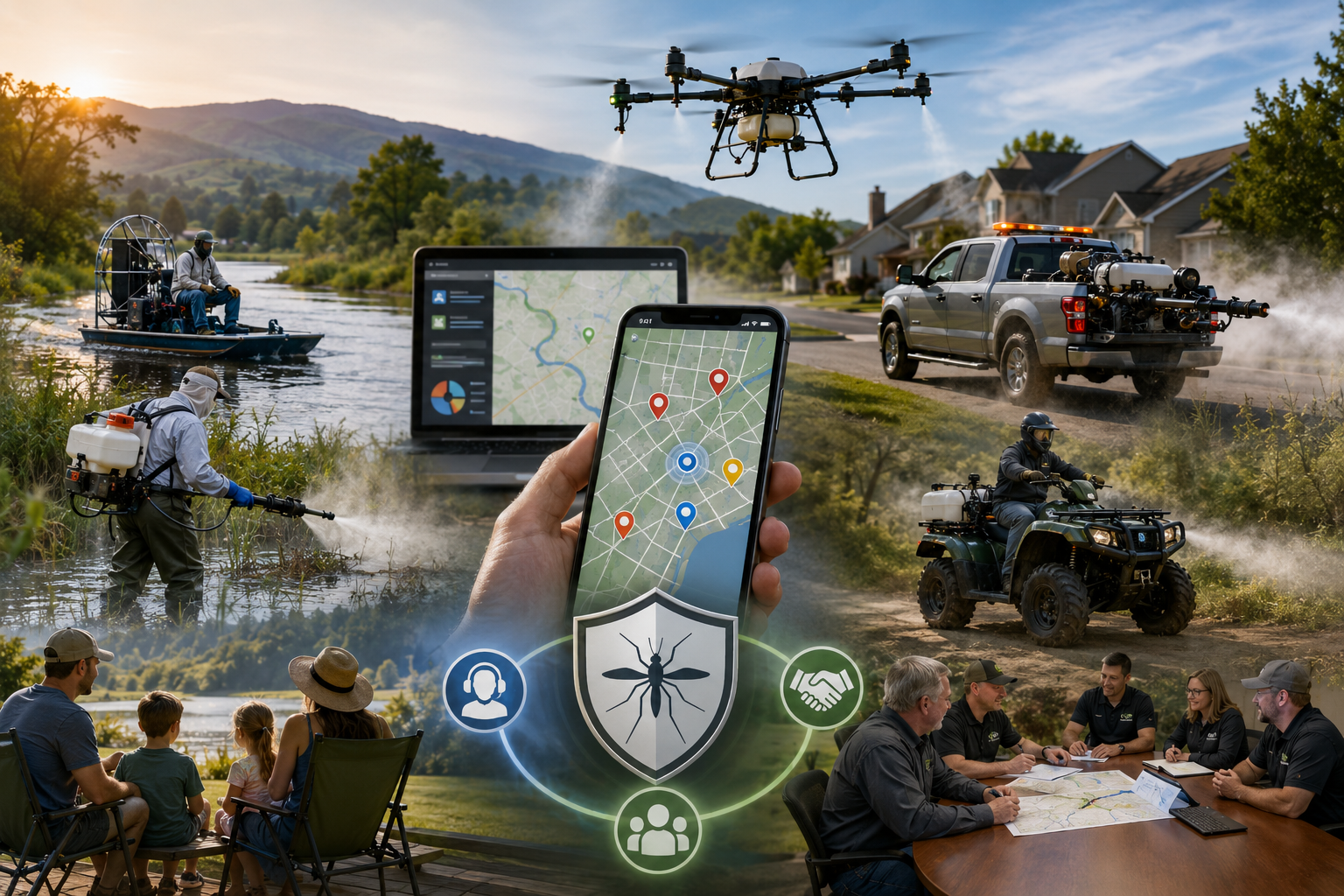
FRVCD now has a dedicated call-answering system to help residents report mosquito problems quickly and efficiently. Complaints received by phone or through the website are entered directly into the field crews’ mapping system, allowing staff to see reports live on their phones and tablets while in the field.
When complaints are received:
- Staff will inspect the area
- Mosquito populations will be evaluated
- Areas may be scheduled for treatment if activity justifies fogging
Rather than broad community-wide fogging, treatments will be more strategic and targeted to areas where mosquito activity is actually occurring.
Public reports help us respond faster and more effectively.
New Website & Online Reporting Tools
The District’s new website includes several upgraded features, including:
- Online mosquito reporting forms
- A live complaint map
- A “No Spray List” sign-up
- Text notification options for neighborhood fogging alerts
- Financial and budget information
- Educational resources about mosquito control
Residents can now submit mosquito complaints online and view reports directly on the map.
Once an issue has been addressed, the report should disappear from the map… assuming technology behaves itself that day. As we all know, computers occasionally have minds of their own.
Self-reporting through the website is the fastest and easiest way to notify staff about mosquito activity, though residents are always welcome to call as well.
One important note:
While social media is excellent for sharing vacation photos, arguing with strangers, and mysteriously losing two hours of your life, FRVCD will not be monitoring Facebook, Nextdoor, or other social media platforms for service requests.
If you need service, please use the website reporting form or call directly.
www.fourriversmosquito.org
(541) 593-1689
TRMVC hopes to add a social media manager in the future, though serious applicants have been surprisingly rare.
New Equipment & Smarter Operations
The District has also invested heavily in improving operational equipment and efficiency.
Fogging Equipment Upgrades
Older electric foggers have been replaced with:
- New fogging units
- Restored and upgraded equipment
- Variable-flow systems that automatically adjust pesticide output based on vehicle speed
In simple terms:
Yes, some of the new foggers may be a little louder—but they are also significantly more effective, efficient, and accurate.
GPS tracking systems have also been installed in fogging vehicles to improve route management and operational accountability.
Drones, Boats & Targeted Treatments
Mosquito control today involves far more than just spray trucks.
This season:
- Boats have been treating mosquito sources along rivers and shoreline habitats
- Ground crews have been aggressively larviciding standing water
- Drones have been deployed to treat difficult-to-reach mosquito breeding areas
Due to lower water levels this year, drone and ground-based applications have been able to cover much of the work that previously required helicopter treatments.
While a helicopter remains on standby if conditions change, current operations have allowed the District to:
- Reduce costs
- Increase efficiency
- Minimize unnecessary pesticide applications
- Reduce product waste
This more targeted approach benefits both taxpayers and the environment.
Early Season Mosquito Activity
This spring has been unusual. Staff have already been conducting extensive larviciding operations using Bti (Bacillus thuringiensis israelensis), a targeted biological mosquito control product commonly used in mosquito management programs.
However, with changing temperatures and drying conditions, there is potential for a mosquito surge in the coming weeks.
If you experience mosquito problems:
- Please report them through the website
- Or call the District directly
Your reports help crews identify developing hotspots quickly.
Budget Rework & Public Transparency
The District budget has been completely reworked as part of the operational transition process.
A public budget hearing is scheduled for:
May 20, 2026
The District is committed to improving transparency and providing residents with a clearer understanding of how mosquito control operations are funded and managed.
Future Open House
FRVCD hopes to host an open house in the near future for community members interested in:
- Learning more about mosquito control
- Seeing equipment up close
- Meeting staff and Board members
- Understanding how treatments are performed
We believe education and transparency are important parts of public service.
We Want Your Feedback
This District belongs to the community, and we want to continue improving.
Please let us know:
- Where mosquitoes are becoming a problem
- What services would help you most
- How we can continue to improve communication and operations
We appreciate your patience during this transition and look forward to building a more responsive, modern, and effective mosquito control program for the District.
Thank you,